 English

 New goods

Description
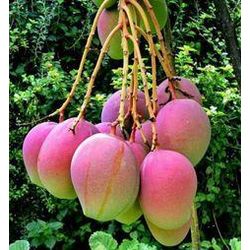
The mango fruits, depending on the variety, can be red, yellow, orange or green. Color is not a measure of the maturity of the fetus. It should be determined by the softness and aroma. Inside the fetus is a large pile bone, which can be separated with difficulty.
The most convenient way to clean and consume mango is to separate the lobules from both sides of the bone, in which it is necessary to make incisions to the peel in the form of a lattice. Turning the skin "inside out", it is easy to cut the cubes of pulp. Center the fetus should be peeled and cut the flesh.
Mango is used in many cuisines around the world. Immature sour fruits are eaten raw with salt, pepper or soy sauce, marinate, they cook chutney and refreshing drinks. Immature mangoes are the original garnish for fish and seafood. From the dried immature mango make a powder that replaces the fruit.
The area of application of mature mango fruits is much broader: They are usually eaten raw, added to salads, snacks, sauces and cocktails. In Central America, ripe mangoes are eaten with chili, vinegar and hot sauces. In South Asia, the pulp of mango is mixed with sugar and yogurt or milk, getting a popular drink - mango lassi. Ripe mangoes are used to make candied fruits, which are added to muesli, cereals, pastries. Especially successfully combines mango with rice and condensed milk.
From mango make tasty juices and nectars, which are widely used for making ice cream, sorbets, cocktails.
Composition:
Fruits of mango are rich in carbohydrates (sugars and fiber), they contain a little protein and fat. Mango contains a complex of vitamins A, C, Group B and minerals: calcium, iron, magnesium, phosphorus, potassium, copper and zinc.
Properties:
Numerous polyphenols, which are part of the mango, neutralize the effect on the body of free radicals, which slows down the aging process. Triterpen and some other substances contained in mango fruits have antitumor properties.
Interesting Facts:
When mangoes were brought to the New World in the XVII century, they were marinated for long-term storage. Over time, other pickled fruits and vegetables, as well as the process of pickling, became known as the word "mango".
Mango peel extracts the toxic substance urushiol, causing an allergic reaction of the skin and mucous membranes in people prone to it.
Calorie and nutritional value of mango:
Calorie content of mango is 65 kcal.
Nutritional value of mango: proteins - 0.51 g, fats - 0.27 g, carbohydrates - 15.2 g